
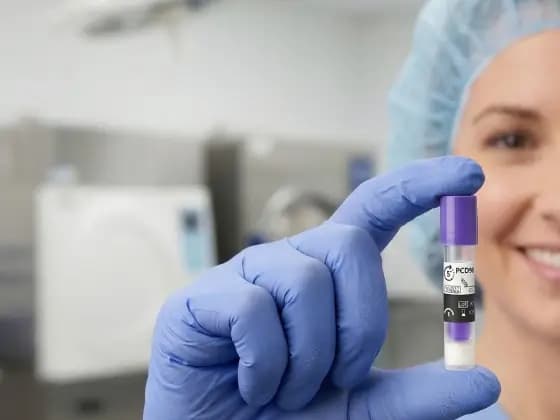
Effective VH₂O₂ Sterilization Monitoring Starts with a Standardized Challenge
Effective sterilization monitoring is a critical component of infection prevention programs in healthcare facilities. In vaporized hydrogen peroxide (VH₂O₂) sterilization processes, biological indicators (BIs) play an essential role in demonstrating process efficacy. However, routine monitoring practices in many Sterile Processing Departments (SPDs) continue to rely on standalone biological indicators placed inside sterilization pouches, an approach that introduces variability and provides a lower level of process challenge than current best practice recommendations.
Bionova® PCD98 was developed to address these limitations. Designed specifically for VH₂O₂ sterilization monitoring, it combines a Self-Contained Biological Indicator (SCBI) with a standardized Process Challenge Device (PCD), creating a defined and reproducible challenge without requiring manual assembly or the use of a sterilization pouch. Results are available in just five minutes using the Bionova® Hyper auto-reader, while digital traceability is achieved through the Bionova® Q platform.
What Is Bionova® PCD98?
Bionova® PCD98 is a single-use device that integrates biological monitoring and process challenge into a single solution for vaporized hydrogen peroxide sterilization.
Each unit consists of:
- A polypropylene tube containing a spore-inoculated carrier with Geobacillus stearothermophilus ATCC® 7953 (ATCC® is a registered trademark of American Type Culture Collection.).
- A glass ampoule containing liquid culture medium.
- A plastic cap with a permeable barrier that allows VH₂O₂ penetration.
- A process indicator printed on the label that changes from violet to green after exposure to hydrogen peroxide.
The device provides fluorescence-based readout in five minutes at 60 ± 2 °C using the Bionova® Hyper auto-reader. Visual confirmation remains available through color change, while every unit includes a DataMatrix code for integration with the Bionova® Q platform, enabling digital registration and traceability. Storage conditions, shelf life, and product specifications are standardized to support routine sterilization monitoring.
Understanding the Difference Between a Process Challenge Device and a Standalone Biological Indicator
According to ANSI/AAMI ST58:2024, a Process Challenge Device is a system containing a biological indicator—or a biological and chemical indicator combination—that evaluates the effective performance of a sterilization process by providing a challenge equal to or greater than the most difficult item routinely processed.
This distinction is fundamental.
A standalone biological indicator placed inside a sterilization pouch cannot provide the same defined challenge because its performance depends on multiple external variables. A ready to usea Process Challenge Device, by contrast, is specifically designed to reproduce a worst-case sterilization scenario by creating controlled barriers to sterilant penetration, air removal, and exposure of the biological indicator. If sterilization is effective under these more demanding conditions, it provides stronger evidence that the processed load has been adequately sterilized.
Conventional Monitoring Versus Bionova® PCD98
One of the main differences between conventional monitoring and Bionova® PCD98 is the level of standardization.
With a biological indicator placed inside a sterilization pouch, the challenge level depends on factors such as pouch permeability, the assembly technique, and operator practice. Manual preparation introduces variability between users and between sterilization cycles.
Bionova® PCD98 eliminates these variables through a fixed architecture designed to provide the same challenge every time.
Unlike conventional monitoring methods, PCD98:
- Requires no manual pouch assembly.
- Is ready to use immediately.
- Provides a fixed and reproducible challenge.
- Delivers fluorescence-based results in five minutes.
- Includes an integrated process indicator on the device label.
This standardized design allows every monitoring cycle to be performed under consistent conditions, reducing variability associated with conventional biological indicator placement.
Why the Challenge Level Matters in VH₂O₂ Sterilization
The principle behind every Process Challenge Device is to simulate conditions that are equal to or more difficult than those presented by the most challenging devices routinely sterilized.
In VH₂O₂ sterilization, sterilization efficacy depends on exposure time, temperature, and hydrogen peroxide concentration. Physical barriers such as lumens, enclosed cavities, cables, cameras, and complex instruments restrict sterilant penetration, making these devices significantly more difficult to sterilize than a biological indicator simply placed inside a pouch.
Because a standalone biological indicator is exposed through a relatively permeable surface, it does not reproduce these demanding conditions.
Bionova® PCD98 was specifically developed to provide a greater and standardized challenge representative of these more complex sterilization scenarios
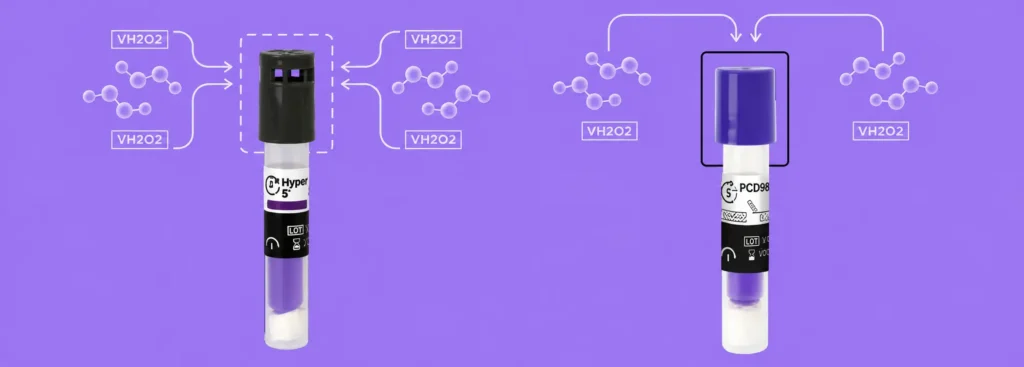
How Bionova® PCD98 Creates a Standardized Process Challenge
The effectiveness of a Process Challenge Device depends on its ability to reproduce conditions that are equal to or more demanding than those presented by the most difficult medical devices routinely processed during sterilization.
Bionova® PCD98 achieves this objective through its self-contained architecture. The biological indicator containing Geobacillus stearothermophilus ATCC® 7953 is enclosed inside a polypropylene tube sealed with a permeable barrier cap. Before the sterilant reaches the spore carrier, vaporized hydrogen peroxide must diffuse through this controlled barrier.
Unlike conventional monitoring approaches, the geometry and material properties of the device create a defined restriction to sterilant penetration. This restriction is established by design and manufacturing specifications rather than by pouch selection or operator technique, providing the same challenge in every sterilization cycle.
The Role of the Permeable Barrier Cap
The cap design is central to the performance of Bionova® PCD98 as a Process Challenge Device.
Because vaporized hydrogen peroxide has relatively limited diffusion capacity, the pinhole-sized aperture creates a meaningful challenge during sterilization. This restricted opening performs two simultaneous functions throughout the sterilization cycle.
During the vacuum phase, air must evacuate the internal cavity through the same narrow pathway before sterilant can effectively reach the biological indicator. During the exposure phase, vaporized hydrogen peroxide must diffuse inward through that identical opening until it reaches the spore carrier.
By simultaneously challenging air removal and sterilant penetration, the device creates substantially more demanding conditions than an open configuration. This physical design closely reproduces the challenge presented by cannulated or lumen-bearing instruments, where trapped air must first be displaced before sterilant reaches the most distant internal surfaces.
The standardized geometry of PCD98 provides a reproducible format that delivers the same internal cavity and the same controlled restriction in every unit manufactured. A passing result under these conditions provides meaningful evidence that the sterilization process was capable of overcoming the type of geometric challenge presented by the most difficult instruments routinely processed.
Why Challenge Standardization Matters
One of the principal limitations of monitoring with a biological indicator inside a sterilization pouch is that the challenge level is not fixed.
Several variables influence the performance of the monitoring system, including:
- The pouch manufacturer and material composition.
- Lot-to-lot variation of sterilization pouches.
- Manual assembly performed by the operator.
- Device orientation and sealing.
- Position within the sterilizer chamber.
As a result, different operators or different sterilization cycles may not produce identical monitoring conditions.
Bionova® PCD98 eliminates these variables through standardized manufacturing specifications. The polypropylene tube, permeable cap, and self-contained architecture provide a fixed challenge without requiring pouch selection or manual assembly. Every unit is designed to deliver the same reproducible process challenge, regardless of the facility or operator.
Key Advantages of Bionova® PCD98
- Ready to Use Without a Sterilization Pouch: Bionova® PCD98 is placed directly inside the sterilizer without assembling a pouch. Eliminating this manual preparation step reduces the potential for operator-dependent errors while simplifying routine workflow in the Sterile Processing Department.
- Greater and Standardized Challenge: The process challenge is defined by the architecture of the device itself rather than by external variables. This allows Bionova® PCD98 to provide a higher and more consistent challenge than a standalone biological indicator placed inside a pouch.
- Five-Minute Fluorescence Results: Using the Bionova® Hyper auto-reader, fluorescence detection provides results within five minutes at 60 ± 2 °C. Faster result availability supports earlier load release decisions when compared with conventional biological indicator systems.
- Integrated Process Indicator: Every device incorporates a process indicator directly on the product label. After exposure to vaporized hydrogen peroxide, the indicator changes from violet to green, confirming sterilant contact without requiring a separate chemical indicator.
- Digital Traceability: Each Bionova® PCD98 includes a DataMatrix code that enables integration with the Bionova® Q platform. Automatic registration reduces manual transcription while creating audit-ready digital records for every sterilization cycle.
- Reproducible Placement: The device is placed directly in the most challenging location inside the sterilizer chamber, as identified by the sterilizer manufacturer or previous validation, without constructing a test pack or placing the device inside a tray.
- Reduced Operational Variability: By eliminating manual pouch preparation and reducing operator-dependent variables, Bionova® PCD98 delivers consistent monitoring conditions from cycle to cycle.
Using Bionova® PCD98
Routine use begins by identifying the sterilizer number, cycle number, and processing date on the device. Bionova® PCD98 is then placed in the most challenging location inside the sterilizer chamber, following prior validation or the sterilizer manufacturer’s instructions. The device should not be placed inside a pouch or package.
Following completion of the sterilization cycle, the process indicator is verified to confirm the color change from violet to green. The biological indicator is then activated by crushing the internal glass ampoule, allowing the culture medium to contact the spore carrier.
The processed unit and an unprocessed positive control from the same lot are incubated in the Bionova® Hyper auto-reader for a maximum of five minutes at 60 ± 2 °C. Fluorescence indicates a positive result (sterilization FAIL), while the absence of fluorescence indicates a negative result (sterilization PASS). Results are recorded before disposal according to local waste regulations
Regulatory and Standards Alignment
Bionova® PCD98 has been developed to comply with internationally recognized standards applicable to biological and chemical indicators used in sterilization monitoring.
The device complies with:
- ISO 11138-1:2017 – Sterilization of health care products — Biological Indicators — Part 1: General Requirements.
- ISO 11140-1:2014 – Sterilization of health care products — Chemical Indicators — Part 1: General Requirements.
- ISO 11139:2018 – Sterilization of health care products — Vocabulary of terms used in sterilization and related equipment and process standards.
In addition, Bionova® PCD98 facilitates compliance with standards and guidance documents that recommend the use of biological indicators within Process Challenge Devices for routine VH₂O₂ sterilization monitoring, including:
- ANSI/AAMI ST58:2024 – Chemical sterilization and high-level disinfection in health care facilities.
- ISO 11138-7:2019 – Guidance for the selection, use and interpretation of biological indicator results.
- ISO 14937:2009 – General requirements for characterization of a sterilizing agent and the development, validation and routine control of a sterilization process for medical devices.
Integration with the Bionova® Hyper Ecosystem
Bionova® PCD98 is designed as part of the Bionova® Hyper integrated solution for VH₂O₂ sterilization monitoring. Within this ecosystem, each component performs a specific function:
Component | Role |
Bionova® PCD98 | Standardized sterilization challenge and biological detection |
| Bionova® Hyper (BHY) | Incubation at 60 ± 2 °C with five-minute fluorescence readout |
Bionova® Q | Automatic data capture, digital traceability and audit-ready records |
Improving Consistency in VH₂O₂ Sterilization Monitoring
Routine monitoring methods based on standalone biological indicators placed inside sterilization pouches may introduce variability because the challenge level depends on pouch characteristics, assembly technique, and operator practice.
Bionova® PCD98 replaces these variable conditions with a standardized architecture specifically developed for vaporized hydrogen peroxide sterilization monitoring.
Its self-contained design provides a defined and reproducible process challenge without requiring manual assembly or sterilization pouches. Combined with five-minute fluorescence results, an integrated process indicator, reproducible placement, and digital traceability through the Bionova® Hyper ecosystem, the device supports a consistent approach to routine monitoring in Sterile Processing Departments.
By providing a greater challenge than a standalone biological indicator in a pouch, Bionova® PCD98 aligns with ANSI/AAMI ST58:2024 recommendations while helping facilities standardize monitoring practices, reduce operational variability, and maintain complete digital traceability for every sterilization cycle.